
Labeling Machinery Engineering & Selection FAQ
15+ years of factory R&D insights: round bottle selection, bubble troubleshooting, ±0.5mm precision, and export FAT acceptance.
Machine Selection
T211T212T413T-218
6 min read
How to Choose Between Standard Rolling, Three-Roller Positioning, and High-Speed Rotary Round Bottle Labelers?
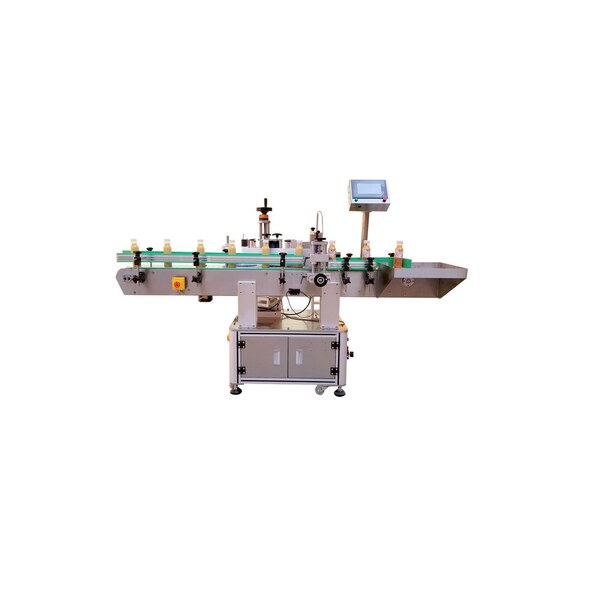
Choose based on accuracy and throughput requirements: (1) Standard Continuous Rolling (T211, 40–120 pcs/min, ±1.0mm) is ideal for standard cylindrical bottles where minor seam overlap variance is acceptable. (2) Three-Roller Positioning (T212 automatic / T413 semi-automatic, 25–60 pcs/min, ±0.5mm) is essential for fixed-point front/back dual labels, orientation alignment with bottle handles/embossing, or high-precision zero-bubble overlap. (3) Continuous Rotary Systems (T-218, 120–400 pcs/min, ±0.5mm) are engineered for high-speed beverage, beer, and pharmaceutical lines requiring cam-driven starwheel stability.
Troubleshooting & Maintenance
T211T212T712T113
7 min read
What Causes Label Bubbles, Wrinkles, and Web Breakage, and How to Eliminate Them Completely?
Field analysis of pressure-sensitive labeling shows over 85% of defects stem from three mechanical variables: (1) Air bubbles occur when the label dispensing linear speed does not match the conveyor/container surface speed, or when the sponge wiping roller pressure is insufficient; synchronize linear speeds in the HMI and calibrate wiping roller pre-load. (2) Wrinkles result from non-parallel peel plates, bottle taper mismatches, or warped container sidewalls; adjust the peel plate pitch/roll angles to parallel the container tangent. (3) Release liner breakage is caused by excessive friction on the brake pad, nicked glassine liner from improper die-cutting blades, or a dull peel plate edge.
Precision & Calibration
T212T712T-218T219
6 min read
How to Consistently Achieve ±0.5mm Labeling Precision at Speeds Above 120 Bottles/Minute?
Maintaining ±0.5mm accuracy at high line speeds requires a closed-loop engineering triad: (1) In-feed Container Stabilization via timing screws and synchronized dual-centering chain belts (HLT T712/T-218) to eliminate bottle wobble before the labeling zone. (2) High-Response Servo Drives (Panasonic/Inovance closed-loop motors with 23-bit absolute encoders) that react within 1.2 milliseconds of fiber-optic trigger detection. (3) Rigid In-House CNC Chassis Machined from T6 aircraft-grade aluminum alloy and 304 stainless steel, preventing vibration resonance from conveyor drive harmonics.
Line Integration & Industry 4.0
T-120T511T512
7 min read
Real-Time Print-and-Apply (PA) vs Pre-Printed Roll Labeling: Which Is Right for Your Traceability Packaging Line?
Choose Print-and-Apply (T-120) when variable, one-to-one data must be generated dynamically at the packaging moment: serial numbers, GS1-128 barcodes, real-time weighing readings, batch QR codes, or carton shipping manifests integrated with ERP/MES databases. Choose Pre-Printed Roll Labelers (T113, T211, T712) for brand aesthetic packaging where graphics require multi-color offset/flexo printing, hot foil stamping, or speeds exceeding 100–300 pcs/min where thermal print engine speed (typically 15–40 pcs/min per station) would bottleneck the line.
Sensors & Consumables
T211T212T712T316
5 min read
How to Reliably Detect and Apply Clear/Transparent Film Labels on Transparent Glass and PET Bottles?
Standard optical transmission sensors fail on transparent labels because light passes through both the clear label and the liner without sufficient contrast. To achieve 100% reliable detection: (1) For the Label Gap Sensor, install an Ultrasonic Label Sensor (e.g., Leuze GSU or SICK) or a Capacitive Sensor (Lion Precision), which measures material density/capacitance variations across the gap rather than optical opacity. (2) For the Bottle Sensor detecting clear glass/PET, utilize a polarized retro-reflective sensor with background suppression or a Keyence coaxial laser sensor calibrated to specular surface reflection.
Industry Standards
T116T113T115
6 min read
What Are the Technical Requirements for 90° Tamper-Evident Corner Sealing on Pharmaceutical and Electronics Boxes?
Tamper-evident corner sealing (HLT T116) requires strict mechanical precision to meet global pharmaceutical serialization standards (such as EU Falsified Medicines Directive 2011/62/EU and FDA CFR Title 21). Key engineering requirements include: (1) Synchronized Top and Side Hold-Down Belts that stabilize lightweight carton boxes from shifting or pitching; (2) Precision 90-Degree Folding Mechanism using multi-stage silicone contour rollers or pneumatic air wipes that crease the label over the box edge without dog-ears or rebound spring-back; (3) Integration of VOID/tamper-evident frangible materials and OCR camera inspection to verify seal integrity.
Procurement & ROI
T312T316T413T211T712
6 min read
Semi-Automatic Benchtop vs Fully Automatic Inline Labelers: How to Calculate Throughput Break-Even and Investment ROI?
The economic break-even between semi-automatic benchtop units (HLT T312/T413, 15–30 pcs/min, $1,500–$3,500) and fully automatic conveyors (HLT T211/T712, 50–200 pcs/min, $6,500–$16,000) occurs at 3,000–5,000 bottles/day. A single automatic inline machine replaces 3 to 5 full-time manual operators, saving $24,000–$60,000 annually in labor costs across North America and Europe, typically delivering 100% equipment payback within 2.5 to 5 months while eliminating human placement variance.
Export & Technical Support
T211T712T116T-218T512
7 min read
How Does HLT Handle Overseas Shipping, Factory Acceptance Testing (FAT/SAT), Electrical Standards, and Remote Technical Support?
HLT operates an end-to-end export delivery protocol covering 60+ countries: (1) Free Material Sample Testing: Clients courier bottle and label samples to our Dongguan factory before ordering for video-recorded validation. (2) Factory Acceptance Testing (FAT): Before dispatch, 500+ bottles are run continuously with live 4K video inspection and full speed/accuracy sign-off. (3) Global Electrical Compliance: Pre-configured for North American 110V 60Hz 1-Phase, European/Oceania 220V–240V 50Hz, or industrial 380V–480V 3-Phase. (4) Robust Crating: Fumigated IPPC solid wooden crates with vacuum moisture-barrier foil. (5) Lifetime Support: High-definition video manuals, English HMI screens, WhatsApp/WeChat 12-hour engineering response, and rapid DHL spare parts dispatch.
Facing Unique Container Shapes or High-Speed Line Challenges?
Courier sample containers and labels to our Dongguan factory. Our engineering team will return a 4K test video and formal proposal within 24 hours.