
Key Differences at a Glance
When configuring a pressure-sensitive round bottle labeling line, matching the mechanical mechanism to bottle tolerances is critical:
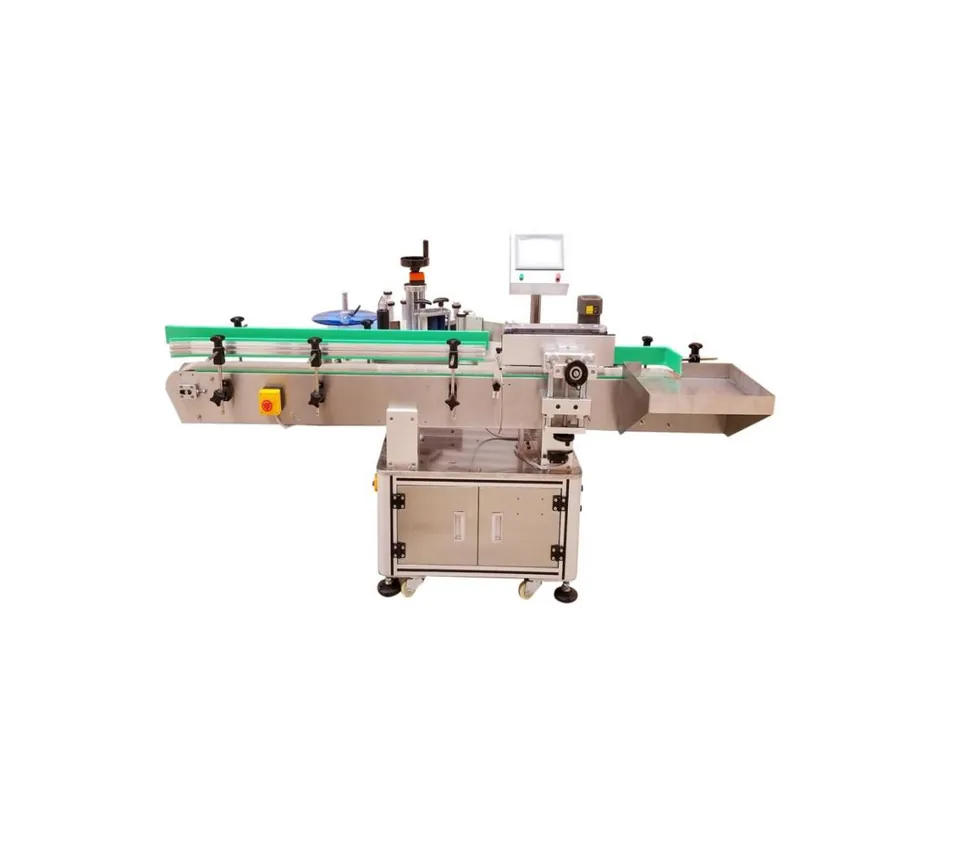
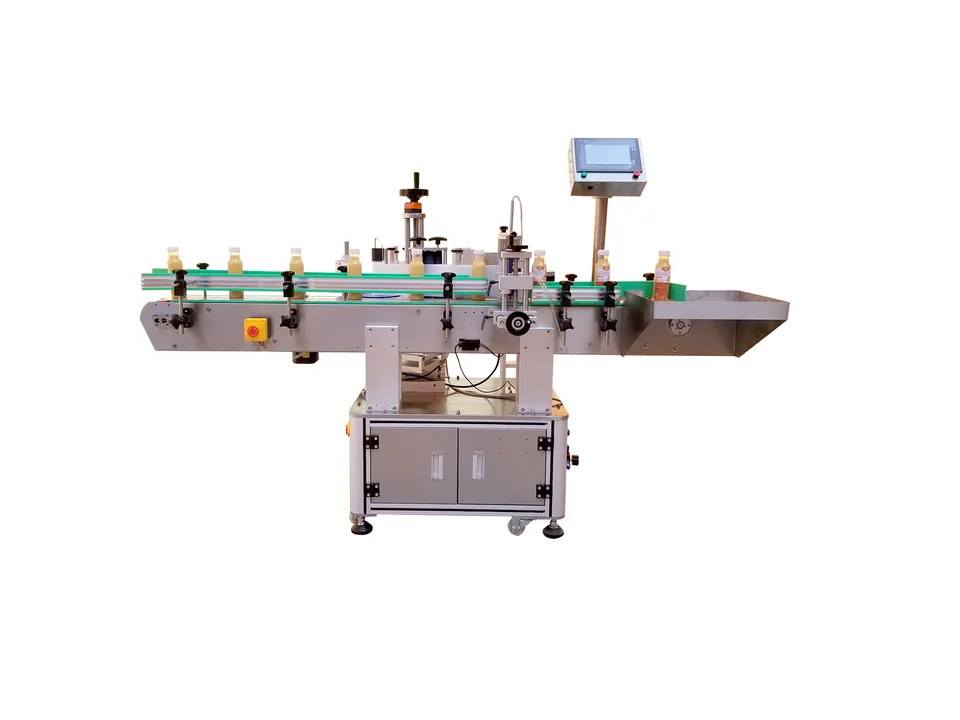
- Standard Continuous Rolling Belt (HLT T211):
- Mechanism: The container travels continuously on the flat conveyor. As the photoelectric sensor detects the bottle, a stepper/servo peel plate dispenses the label leader, and a motorized sponge rolling belt presses the bottle against a side sponge cushion.
- Best For: Single full-wrap or partial-wrap labels on glass, PET, or metal cans where exact angular orientation is not required.
- Throughput: 40–120 pcs/min.
- Advantage: Fast changeover (5–10 minutes) with no change parts required across Ø25–100mm containers.
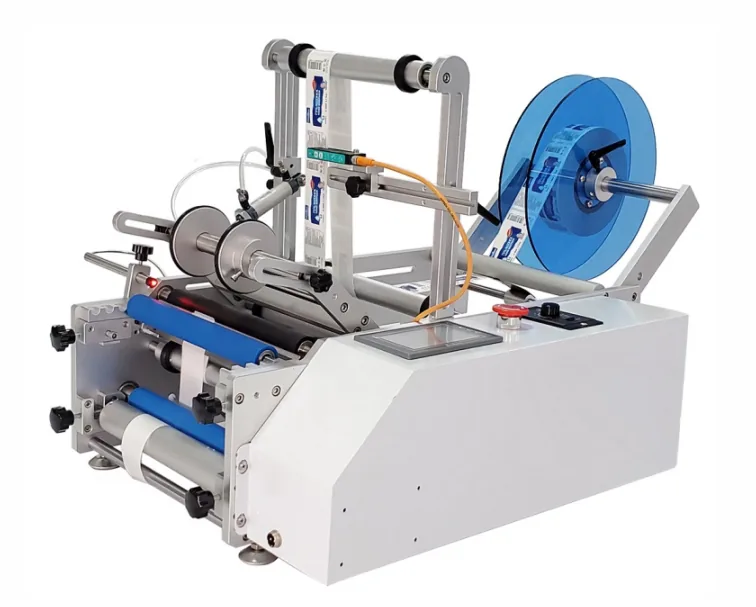
- Three-Roller Positioning Mechanism (HLT T212 & T413):
- Mechanism: The bottle is intercepted and clamped between three precision-ground rollers (one driving roller and two pneumatic idle rollers) that spin the container in place before and during label dispensing.
- Best For:
- Applying two separate labels (front and back) from a single label roll with exact gap spacing.
- Orienting labels relative to container features (embossed logos, seam lines, or spray pump handles).
- Containers with slight draft angles or minor out-of-round tolerances.
- Throughput: 25–60 pcs/min.
- Advantage: Premium ±0.5mm accuracy with virtually zero head-to-tail overlap error.
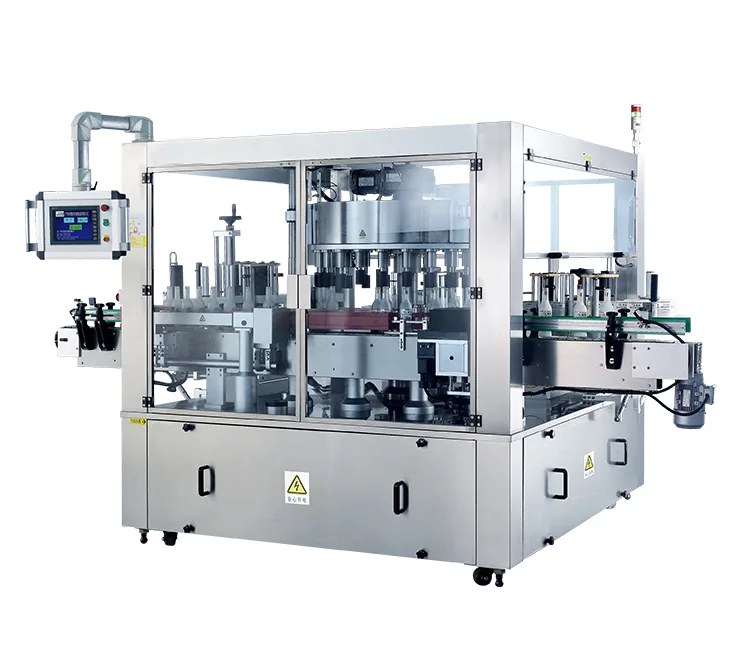
- Multi-Station Rotary Cam Starwheel (HLT T-218):
- Mechanism: Containers are separated by an infeed worm screw into pocket starwheels and held firmly under mechanical top-capping chucks. Bottle stations rotate on programmable servo/cam plates while passing 1 to 3 labeling stations.
- Best For: High-speed beverage bottling, beer, spirits, and large pharmaceutical packaging lines running over 10,000 bottles per hour.
- Throughput: 100–350 bottles/min.
- Advantage: Continuous uninterrupted motion, multi-panel labels (body + shoulder + neck strip), and 100% vision inspection rejection integration.