Decision Matrix: Print-and-Apply vs Pre-Printed
- Dynamic Content vs Static Aesthetics:
- Pre-printed labels are printed in advance by flexographic or digital press manufacturers with CMYK inks, UV varnish, and foil stamping. They are cheaper per unit in high quantities.
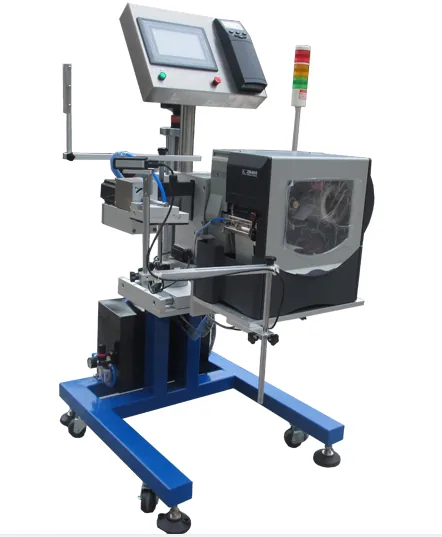
- Print-and-Apply engines use thermal transfer (ribbon) or direct thermal printing in monochrome (black) at 203, 300, or 600 DPI.
- Speed Considerations:
- A thermal print engine must stop or throttle to 4–12 inches per second to generate clean, readable 1D/2D barcodes. Consequently, individual print-and-apply stations typically operate at 15–45 applications/minute depending on stroke cylinder length.
- For speeds above 60 pcs/min, lines deploy dual alternating PA units or switch to pre-printed labels with continuous online ink-jet coding.
- Application Methods in HLT T-120:
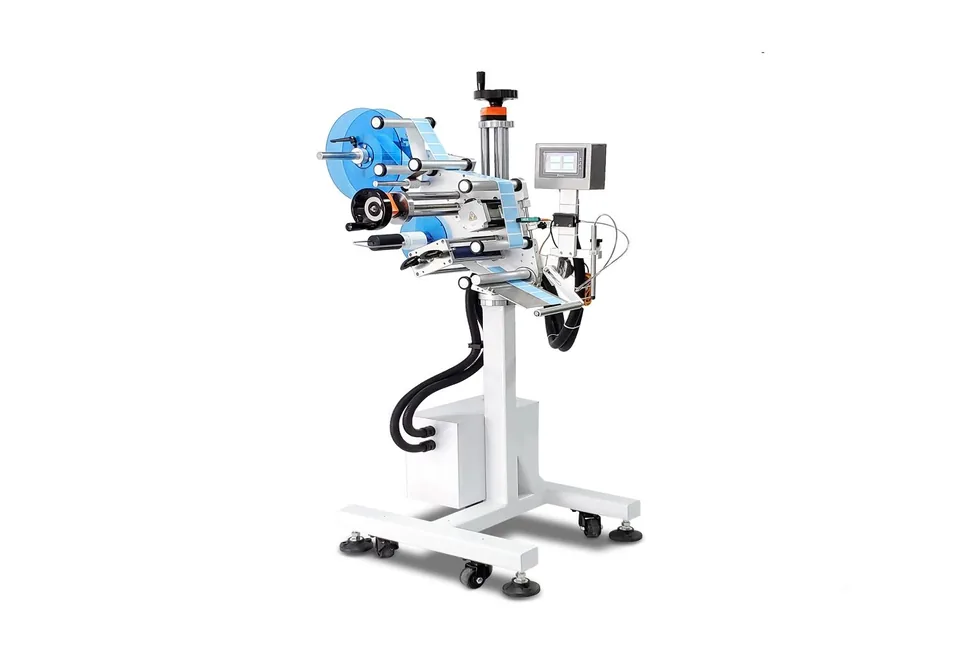
- Tamp-Blow (Pneumatic Cylinder): Label is held by vacuum pad and tamped directly onto stationary or moving cartons.
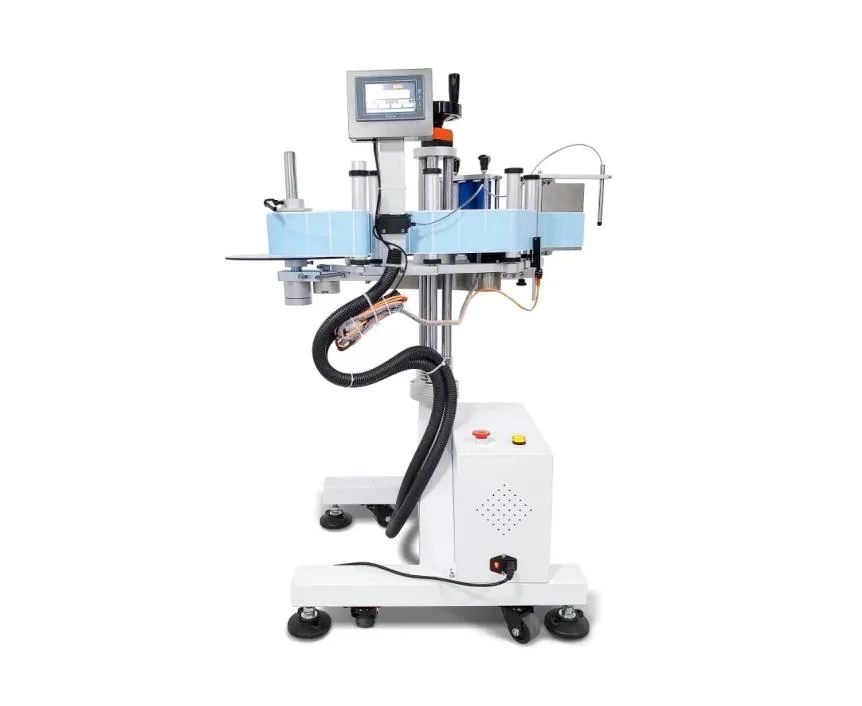
- Air-Blow (Non-Contact): Label is blown onto delicate, fragile, or uneven surfaces by compressed air blast without touching the product.
- Corner-Wrap / Wipe-Arm: Applies around two adjacent faces of shipping corrugated cartons.